
Anyone searching for free OnlyFans pages will quickly notice how many results look almost identical. That similarity is not a coincidence: cloning a profile is cheap, and the platform has no built-in directory that verifies who is behind a page. This article shows how a few minutes of checking a bio, a photo, and a post history can separate a genuine profile from a copied one.

A free page is simply a page where the subscription price is set to $0. Instead of monthly income, the creator earns through pay-per-view messages and tips. Paid pages sit in a range from $4.99 to $49.99, with most between $4.99 and $15 and an average of $5 to $10. There is no base price below $4.99; only promotional first months may dip under that figure.
Because the platform takes a 20% fee on everything and the creator keeps 80%, a free page still has to earn through messages and tips. That detail matters when you judge whether a profile behaves like a real business or like a copy pasted template. The checks below apply to both free and paid pages.
Bio wording
Cloned pages often reuse the same sentence patterns. Look for a bio that mixes several languages in one line, promises “daily posts” without a single visible date, or lists contact methods that do not match the linked accounts. Genuine bios tend to be short, specific, and stable over time.
A second signal is inconsistency between the bio and the page itself. If the bio says a creator posts weekly but the visible history shows months of silence followed by ten uploads in one day, the profile was likely filled in bulk. Bulk filling is common when someone copies an old page and re-uploads its media.
| Check | Typical cloned page | Typical genuine page |
| Subscription price | $0.00 with no message activity | $0.00 with steady message activity |
| Paid range reference | Claims prices below $4.99 as standard | Uses $4.99-$49.99, mostly $4.99-$15 |
| Bio wording | Generic, repeated across profiles | Specific, stable wording |
| Earnings split described | Rarely mentioned | 20% platform, 80% creator, stated correctly |
A useful rule: if the bio could belong to any account on the platform, it probably belongs to none. Ranking sites exist precisely because there is no discovery feed, so copied bios spread easily. BestOnlyFans and similar directories try to filter them, but no directory is complete.

Photo reuse
You do not need special software to check whether images were taken from somewhere else. Save one clear photo from the page, then run a reverse image search through a standard search engine. If the same picture appears on several unrelated profiles, the page is copying its gallery rather than shooting it.
Pay attention to the background and the lighting as well. A gallery that jumps between different rooms, different cameras, and different seasons within a single week is usually assembled from mixed sources. Consistent settings across months are a mild sign of authenticity, not proof.
- Reverse-search one clear photo per profile.
- Compare backgrounds and lighting across the gallery.
- Look for watermarks from other sites.
- Check whether images repeat inside the same page.
- Note whether photo dates match the claimed posting schedule.
Two-step authentication on your own account limits damage if a cloned page tries to move you to a third-party payment page. Enable it before you subscribe to anything, free or paid. The settings screen takes under a minute to configure.

Post history
The upload pattern tells a story that the bio cannot. A genuine page usually shows irregular but continuous activity: gaps of days, sometimes weeks, then normal posting resumes. A cloned page often shows a large batch of uploads on one or two dates, followed by nothing.
Another pattern is a sudden switch in style. If the first fifty posts look like one person and the next fifty look like someone else, the account may have changed hands or been assembled from multiple sources. Neither case is automatically fraudulent, but both deserve a closer look before you spend money.
| Pattern | What it suggests | Action |
| One bulk upload date | Media copied in a single session | Check image reuse |
| Months of silence, then daily posts | Account reactivated or resold | Read recent messages |
| Style change mid-history | Ownership or source changed | Compare with linked socials |
| Steady gaps with replies | Normal independent posting | Proceed with a free follow |
Timestamps are visible on most pages, so you can map gaps without tools. Write down three dates and see whether the bio’s claims match them. If the bio promises daily content and the history shows three posts in two months, the description is marketing rather than fact.

External links
Most genuine creators link at least one social account, and that account usually predates the paid page. Cross-check the posting style, the follower count, and the language used. A page whose only external link is a shortened redirect deserves more caution than one with a long-standing public profile.
Verify that the linked account actually mentions the page. A real creator normally announces a new page once; a cloned profile links to accounts that have never heard of it. That mismatch is one of the fastest signals you can find.
- The linked social account’s age.
- Whether it mentions the page in a post.
- Whether the follower counts are roughly plausible.
- Whether the same photos appear there first.
- Whether the account replies to comments.
The platform’s growth explains why cloning became common. More accounts mean more noise, and the absence of a discovery feed pushes users toward third-party rankings. That structure rewards careful checking rather than fast clicking. For a starting point, free onlyfans ios collects free pages.

Follower clues
Follower numbers alone mean little, but ratios do. A page with a very high follower count and almost no interaction on recent posts is often a purchased or recycled audience. The same applies to accounts that gain thousands of followers in a single day and then stop growing.
Compare the follower count to the number of visible likes on recent posts. A rough balance suggests an engaged audience. A large gap suggests either inflated numbers or an audience that has moved on, and neither supports a subscription decision.
- Sudden one-day spikes in followers.
- High follower count with near-zero likes.
- Comment sections filled with identical replies.
- Follower growth that stops completely.
- No interaction between the page and its audience.
Practical tip: before paying anything, set a two-minute timer and check the bio, one photo, and the last ten posts. If two of the three look copied, close the tab and move on. A free subscription costs nothing, but a pay-per-view message can cost more than a monthly paid subscription at the $4.99 minimum.
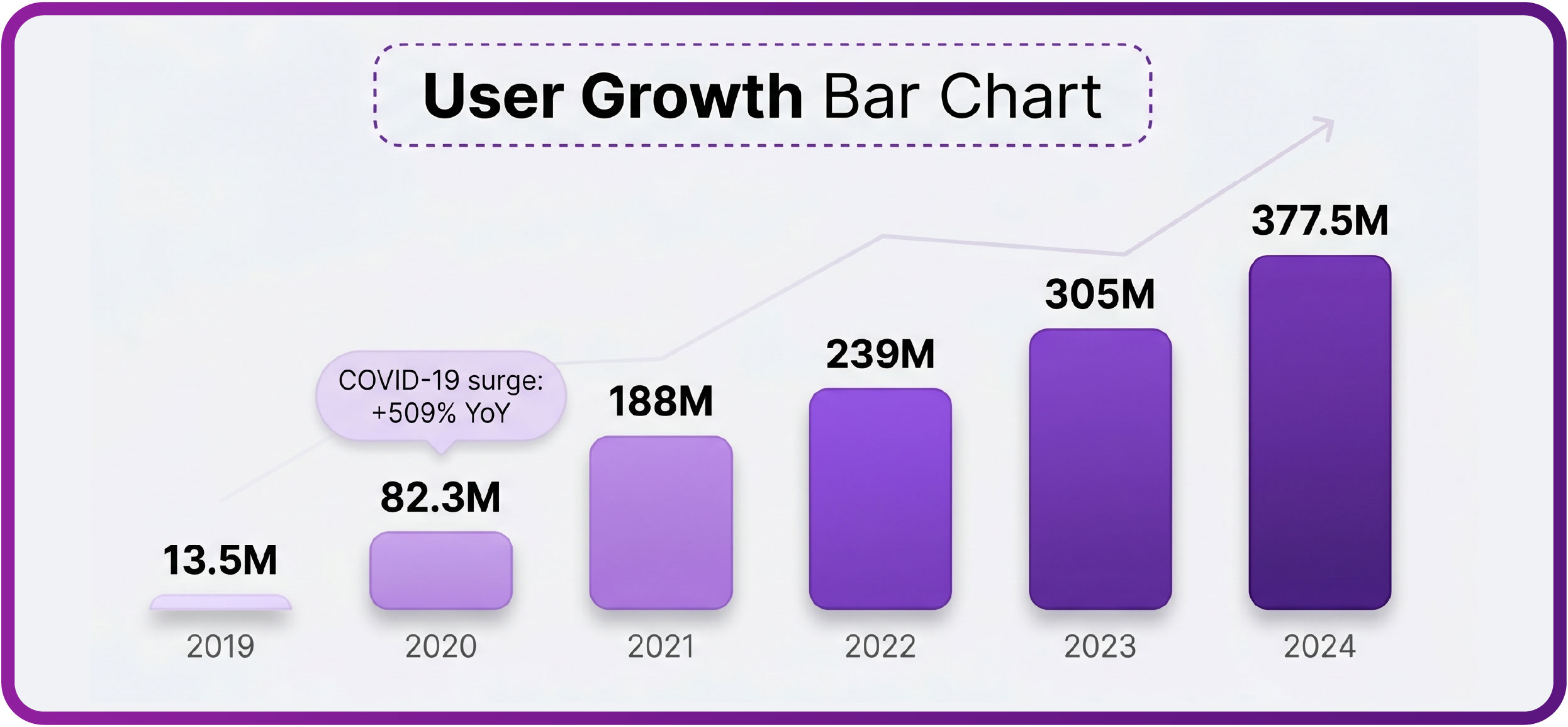
Growth charts like the one above are useful context, not proof of anything about a single page. Use them to understand the environment, then judge each profile on its own evidence. BestOnlyFans publishes similar context for readers who want the broader picture.

Message bait
Normal greetings vary: they reference something specific, arrive after a reply, or respond to a question. Copy-paste pitches do the opposite. They arrive immediately after subscription, repeat the same wording, and push toward an external payment method.
A message that asks you to pay outside the platform is the clearest warning sign available. The platform fee of 20% applies to subscriptions, tips, and pay-per-view, and the creator keeps 80%; moving payment off-platform removes both protections. There is no legitimate reason for a genuine page to request it.
- Identical greetings sent to every subscriber.
- Requests to pay through another app.
- Pressure to act within minutes.
- Links to pages that ask for card details.
- Messages that ignore your previous replies.
If a creator raises the subscription price, auto-renew stops and existing access lasts until the current paid period ends. A cloned page cannot explain that rule correctly, which makes it a simple question to ask. Listen for a vague or contradictory answer.
Walk-away rules
Decide your rules before you browse, because decisions made in the moment tend to be worse. Two clear signals are enough to leave. You do not need certainty, only a reasonable doubt that the profile is what it claims to be.
Keep a short list and apply it consistently. This habit also protects you from the second visit, when a profile that looked suspicious earlier seems more convincing simply because it is familiar. For a related walkthrough of setup steps, see this guide to free onlyfans ios.
- Bio text that appears word-for-word elsewhere.
- Images found on unrelated profiles.
- One bulk upload date with no later activity.
- External links that never mention the page.
- Any request to pay outside the platform.
- Price claims below the $4.99 minimum.
Cancelling is straightforward, so an experimental free subscription carries little risk. The risks sit in messages and off-platform payments, not in the follow itself. Treat the follow as a test, and treat the first message as the real decision point.
Earnings on the platform are unevenly distributed, which is another reason cloned pages exist: they imitate visible success without doing the work. Understanding that distribution helps you read follower and interaction numbers more realistically. A modest page with steady replies is often a better signal than a large page with none. BestOnlyFans refreshes its rankings every month.
FAQ
Can a free page ever charge below $4.99?
No. The base subscription minimum is $4.99, and only promotional first months may dip below that figure. Any page claiming a permanent lower price is not describing the platform’s real pricing.
Why do ranking sites exist if the platform has no directory?
The platform has no built-in discovery feed or directory, so users rely on third-party rankings to find pages. That gap is also why copied profiles spread, since nothing on-platform verifies a new account.
Do I lose access immediately if the price changes?
No. When a creator raises the subscription price, auto-renew stops, and existing access lasts until the current paid period ends. You keep what you already paid for.
How much does the platform take from tips and pay-per-view?
The fee is 20% on subscriptions, tips, and pay-per-view, and the creator keeps 80%. Any page asking you to pay outside the platform removes that structure and your protection with it.